Astaxanthin Benefits: A Complete Guide to a Potent Natural Antioxidant
ASTAXANTHIN · EDUCATIONAL GUIDE
Astaxanthin Benefits: A Complete Guide to a Potent Natural Antioxidant
What you need to know about astaxanthin — how it works, what research says, and how to choose a quality supplement.
BTERLIF · 6 min read
“Astaxanthin is a carotenoid that spans the entire cell membrane — protecting both the water-based interior and the fatty outer layer. Most antioxidants only work in one environment.”
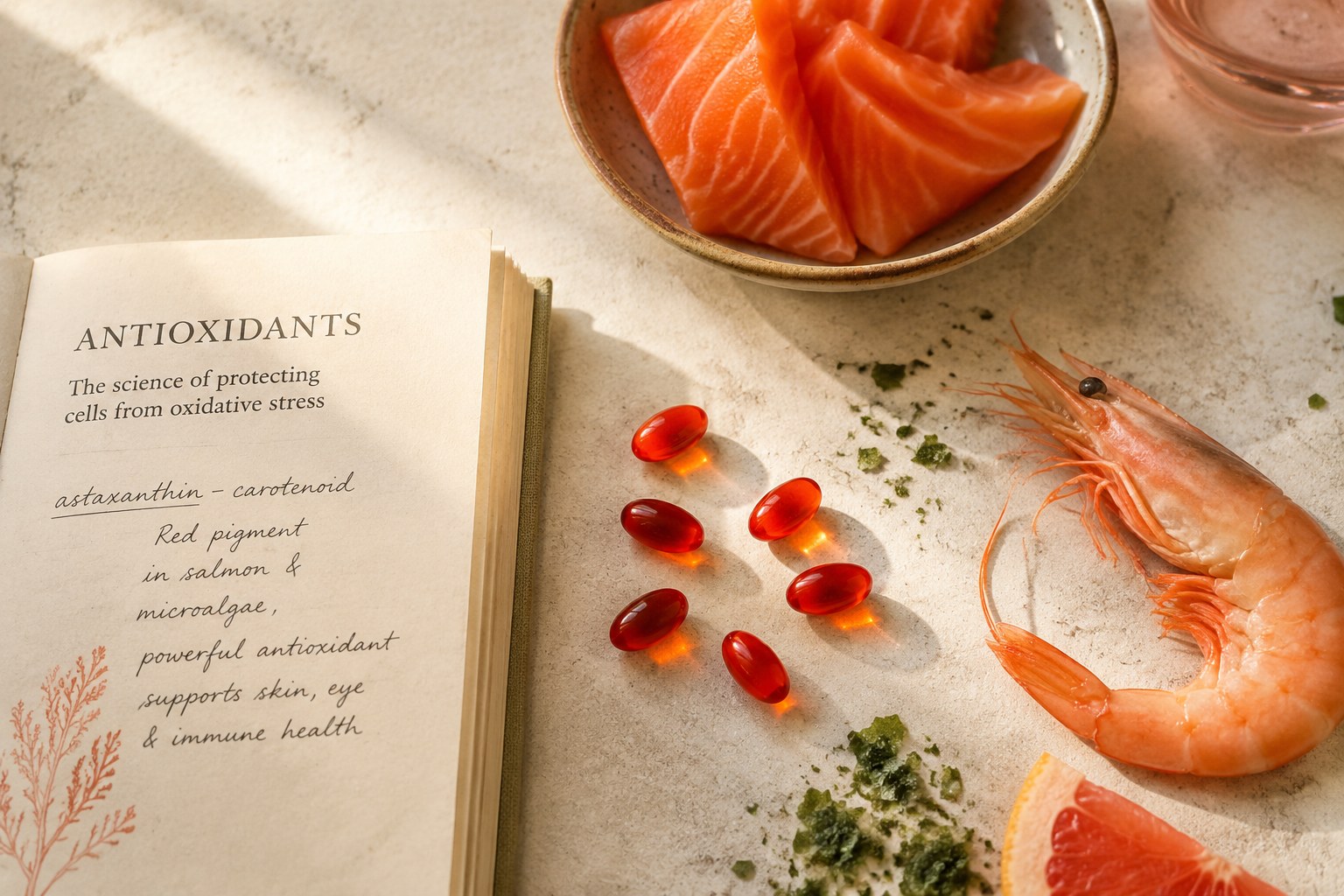
Astaxanthin (pronounced as-ta-ZAN-thin) is a naturally occurring pigment that belongs to the carotenoid family — the same family that gives carrots their orange color and tomatoes their red hue. It is found primarily in microalgae and is what gives salmon, shrimp, and flamingos their distinctive pink and red coloration.
What makes astaxanthin different is its molecular structure. Unlike many antioxidants that work primarily in water-based or fat-based environments, astaxanthin spans the entire cell membrane, providing protection both inside and outside the cell. A 2022 review in Nutrients described its antioxidant capacity as measurably higher than several other common carotenoids in certain laboratory assays.
Here is what this guide covers: what astaxanthin is, how it works, what research says about its benefits, how to choose a quality supplement, and what to expect when taking it.
What Is Astaxanthin?
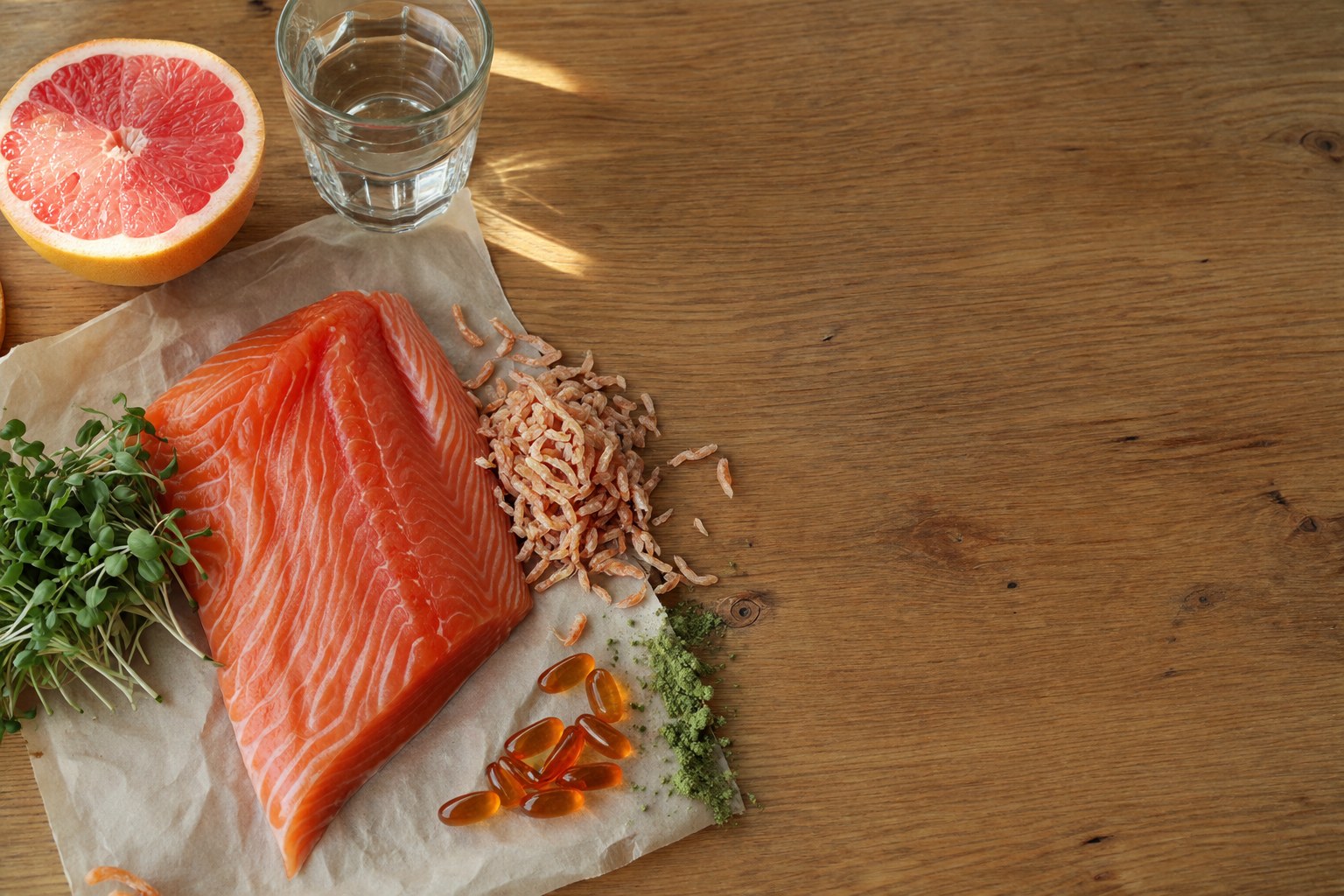
Astaxanthin is a keto-carotenoid naturally synthesized by several microorganisms. The microalga Haematococcus pluvialis is the most abundant natural source — when these microalgae are exposed to stress (intense sunlight, lack of nutrients, high salinity), they produce astaxanthin as a protective mechanism.
| Source | Astaxanthin Content | Notes |
|---|---|---|
| Haematococcus pluvialis | 1.5–3.0% of dry weight | Primary natural source for supplements |
| Wild salmon | 3–37 mg per kg | Varies by species and diet |
| Krill | ~120 mg per kg | Also contains EPA/DHA omega-3s |
| Farmed salmon | 6–8 mg per kg | Often supplemented in feed |
| Shrimp, crab | 10–40 mg per kg | Concentrated in shells |
How Astaxanthin Works
Most antioxidants work either in the water-based interior of cells or in the fatty membranes. Astaxanthin works differently — it embeds within the cell membrane, spanning from the inner to the outer layer. There it can neutralize free radicals on both sides.
MECHANISM OF ACTION
→
Spans inner & outer layers
→
Neutralizes free radicals on both sides
→
Protects lipid membranes + cell interior
Source: Nutrients, 2022 review; Antioxidants, 2019 review
Top Researched Astaxanthin Benefits
1. Skin Health and Appearance
A 2018 review in Nutrients noted astaxanthin’s photoprotective and antioxidant properties. In one clinical trial, 30 healthy women took 6 mg daily for 8 weeks and applied it topically. Results showed measurable improvements in crow’s feet, skin elasticity, and age spot pigmentation.
2. Eye Health and Vision
Your eyes use a lot of oxygen and are exposed to light all day, making them vulnerable to oxidative stress. Research indicates astaxanthin may help reduce eye fatigue and strain. Studies have explored its role in supporting macular health.
3. Exercise Recovery and Muscle Function
Exercise — especially hard or unfamiliar workouts — produces oxidative stress. Several studies suggest astaxanthin may help reduce markers of muscle damage after exercise and support endurance during physical activity.
4. Healthy Aging and Cellular Health
A 2022 review in Antioxidants highlighted astaxanthin’s potential role in supporting healthy aging through effects on oxidative stress pathways. Studies suggest it may help maintain mitochondrial function.
5. Immune Function
Preliminary research suggests astaxanthin may help support normal immune function by protecting immune cells from oxidative damage and maintaining healthy inflammatory response pathways.
| Health Area | Key Finding | Typical Dosage |
|---|---|---|
| Skin health | Improved elasticity, reduced wrinkles at 8 weeks | 4–6 mg/day |
| Eye health | Reduced eye strain and fatigue | 4–12 mg/day |
| Exercise recovery | Reduced markers of muscle damage | 4–12 mg/day |
| Healthy aging | Supports mitochondrial function | 6–12 mg/day |
| Immune function | Supports normal immune cell activity | 4–8 mg/day |
Astaxanthin vs Other Antioxidants
People often ask how astaxanthin compares to other antioxidants. Here is a general comparison:
| Antioxidant | Solubility | Primary Mechanism | Key Difference |
|---|---|---|---|
| Astaxanthin | Fat-soluble | Spans cell membrane, quenches singlet oxygen | Dual-membrane protection |
| Vitamin C | Water-soluble | Electron donor in aqueous environments | Essential for collagen |
| Vitamin E | Fat-soluble | Breaks lipid peroxidation chain reactions | Works with vitamin C |
| CoQ10 | Fat-soluble | Mitochondrial electron transport | Cellular energy |
| Beta-Carotene | Fat-soluble | Singlet oxygen quenching | Converts to vitamin A |
Different antioxidants work in different parts of the body. A mix from food and supplements is usually the way to go.
“Natural astaxanthin from Haematococcus pluvialis is the form most commonly used in dietary supplements and has been studied in trials lasting up to 16 weeks at 12 mg per day.”
Frequently Asked Questions
How long does it take to see results from astaxanthin?
Individual results vary. Some people notice changes in skin hydration within 4–8 weeks. Exercise recovery and eye fatigue effects may show up within 2–4 weeks.
Can I take astaxanthin with other supplements?
Astaxanthin is generally safe to take alongside other supplements. It pairs well with vitamin C, vitamin E, and omega-3s. Consult your healthcare provider before combining multiple supplements.
Is astaxanthin safe for long-term use?
Natural astaxanthin has been studied in trials lasting up to 16 weeks at 12 mg per day with no significant adverse effects. Follow label instructions and consult your doctor for extended use.
Can I get enough astaxanthin from food alone?
Wild salmon contains astaxanthin, but amounts vary. A typical serving has roughly 1–4 mg. Supplements are more practical for consistent dosing.
References
- Davinelli, S., et al. (2018). Astaxanthin in Skin Health. Nutrients, 10(4), 522.
- Bjørklund, G., et al. (2022). Astaxanthin as a Nutraceutical. Nutrients, 14(21), 4669.
- Sztretye, M., et al. (2019). Astaxanthin as Mitochondrial-Targeted Antioxidant. Antioxidants, 8(12), 609.
- Kidd, P. (2011). Astaxanthin with Diverse Clinical Benefits. Alternative Medicine Review, 16(4), 355–364.
- NIH Office of Dietary Supplements. Vitamin C Fact Sheet.
- NCCIH. (2024). Antioxidants: In Depth.
Conclusion
Astaxanthin has been studied for its antioxidant properties, with research supporting potential benefits for skin health, eye function, exercise recovery, and cellular wellness. Its molecular structure sets it apart from many other antioxidants. As with any supplement, it works best alongside a balanced diet, regular exercise, adequate sleep, and stress management.
One thing to remember: Astaxanthin’s molecular structure lets it protect both the water-based interior and the fatty membrane of your cells. Most other antioxidants do not have this dual action.
Skin & Beauty
4–6 mg/day with meal
Eye & Recovery
4–12 mg/day with meal
General Wellness
4–8 mg/day with meal
Interested in Astaxanthin?
Sign up to receive updates about astaxanthin and new product releases.


About author